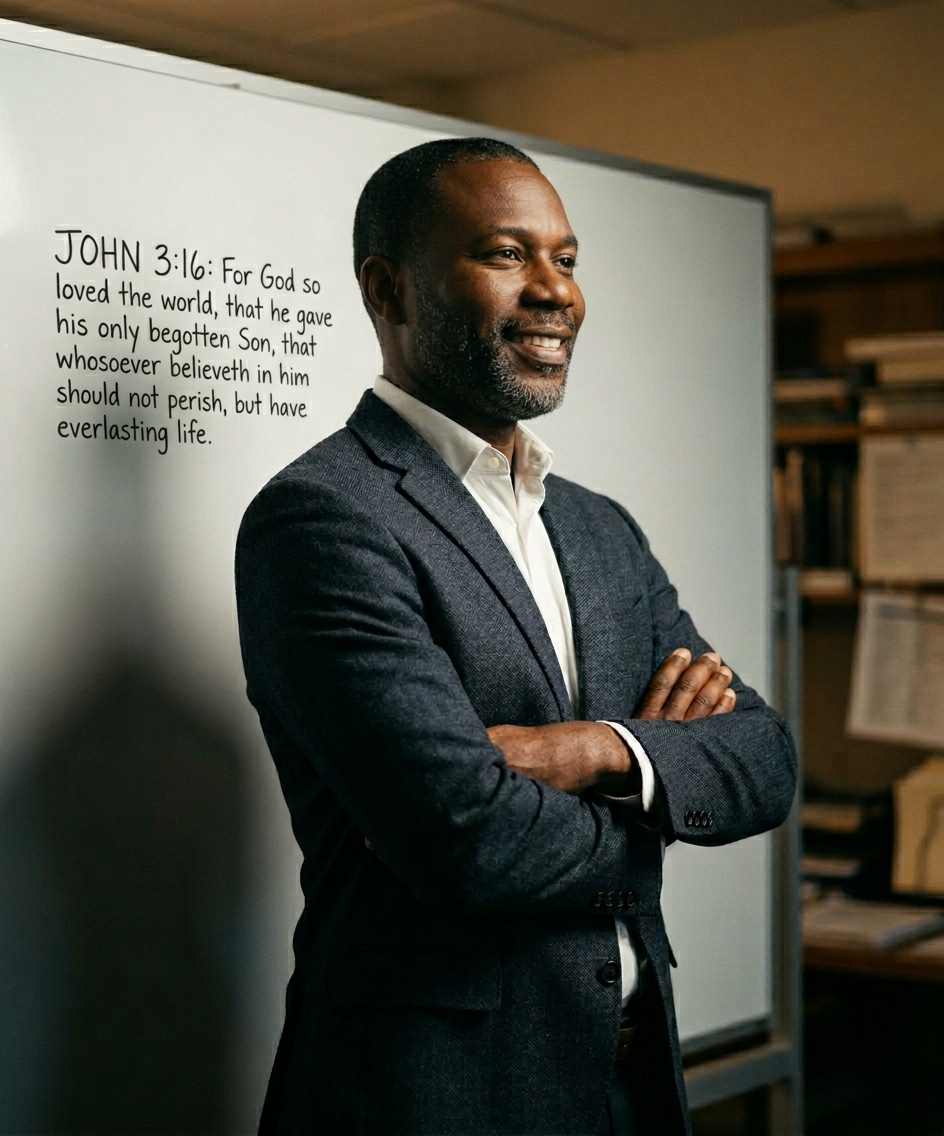
The resurrection of Jesus from the dead is the determining factor in the Christian faith. The apostle Paul made this claim to early Christians in 1 Corinthians 15:17: "And if Christ has not been raised, your faith is futile and you are still in your sins." The resurrection is thus the cornerstone that holds the entire edifice of Christian faith together. But how do we know that Jesus truly rose from the dead? Historians — believers and non-believers alike — have identified a number of historical facts surrounding the death of Jesus that any credible explanation must account for.
12 Historical Facts
The following twelve facts are recognized by the vast majority of historians who study the question, regardless of their theological convictions. They form the historical bedrock upon which the resurrection claim rests.
- Jesus died by crucifixion. This is attested by both biblical and non-biblical sources (Josephus, Tacitus), and confirmed by modern medical analysis of Roman crucifixion methods. No serious historian disputes that Jesus of Nazareth was crucified under Pontius Pilate.
- Jesus was buried. The gospels record that Joseph of Arimathea, a member of the Jewish council, requested the body of Jesus from Pilate and placed it in his own newly-hewn tomb. This detail, involving a named individual of public standing, lends strong historical credibility to the burial account.
- Jesus' death caused his disciples to despair and lose hope. The disciples had believed Jesus was the promised Messiah. In Jewish expectation, the Messiah was not supposed to die — and certainly not in the humiliating manner of a crucified criminal. His death shattered their hopes and left them hiding in fear.
- The tomb was found empty just a few days later. The disciples preached the resurrection in Jerusalem — the very city where Jesus had been buried. If the tomb had not been empty, the authorities could easily have produced the body and ended the movement immediately. The empty tomb was an acknowledged fact even by those who opposed Christianity (Matthew 28:12–13).
- The disciples claimed they had seen Jesus alive after his death. These were not vague spiritual impressions. The disciples reported bodily appearances — one even touched his wounds (John 20:27). These were experienced as encounters with a living, physical person.
- The disciples were utterly transformed — from despair to bold proclamation. Men who had hidden behind locked doors for fear of the authorities (John 20:19) became fearless proclaimers of the resurrection, willing to face imprisonment and death rather than recant their testimony. This dramatic transformation demands explanation.
- The resurrection was central to the earliest Christian preaching. The creed recorded in 1 Corinthians 15:3–7 is recognized by scholars as pre-Pauline tradition. William Craig has argued that this creed can be traced to within five years of Jesus' death — making it one of the earliest historical sources about Jesus available to us.
- This message was proclaimed in Jerusalem, where the events had occurred. The disciples preached the resurrection not in some distant region where it could not be checked, but in Jerusalem itself — where eyewitnesses to Jesus' ministry, death, and burial were still alive and where the tomb was accessible.
- The church was born and grew rapidly. As William Craig has noted, in first-century Judaism there was no concept of an executed Messiah who would rise before the general resurrection at the end of history. The emergence and explosive growth of the early church — centered on the claim of Jesus' bodily resurrection — is a historical phenomenon that requires explanation.
- Sunday became the primary day of Christian worship. Jewish Christians, whose entire religious tradition was built around Saturday (the Sabbath), abandoned their centuries-old practice and began gathering for worship on Sunday — the day of the reported resurrection. This extraordinary change in a deeply tradition-bound community speaks to the magnitude of what the disciples believed had occurred.
- James, the brother of Jesus (formerly a skeptic), was converted. During Jesus' ministry, his own brothers did not believe in him (John 7:5). Yet James went on to become a leader of the Jerusalem church and eventually died a martyr's death for his faith in Jesus. James himself testified that his conversion was the result of seeing the risen Jesus (1 Corinthians 15:7).
- Paul, a persecutor of Christians, was converted on the Damascus road. Paul (formerly Saul of Tarsus) was a zealous enemy of the early church who oversaw the execution of Christians. His sudden and total reversal — which he attributed to an encounter with the risen Jesus (Acts 9; Galatians 1:11–17) — converted him into the most prolific apostle of the early church. Like James, Paul eventually died for his testimony.
Conclusion
The philosopher of science Karl Popper argued that the strength of a theory is determined by the "risky predictions" it makes — that is, specific predictions that, if falsified, would refute the theory. By this standard, the resurrection is a remarkably well-confirmed historical theory. The disciples staked their lives on a very specific, falsifiable claim: that Jesus of Nazareth, who had been crucified and buried, was seen alive by numerous witnesses. That claim was made publicly, in the city where the events occurred, within the lifetimes of the witnesses — and it was never refuted.
The twelve facts above constitute a convergent body of evidence. Any theory that denies the resurrection — theft of the body, hallucination, mass delusion — must account for all twelve, and no alternative hypothesis has succeeded in doing so with comparable explanatory power.
"Old Testament and Jesus Himself predicted he would rise from the dead, and the evidence supports the conclusion that he did so."
Norman Geisler & Ron Brooks — When Skeptics Ask
Point clé
La résurrection de Jésus n'est pas un article de foi aveugle — c'est une affirmation historique fondée sur douze faits que la grande majorité des historiens reconnaissent, quelle que soit leur conviction théologique. Elle demeure l'explication la plus puissante de l'ensemble de ces données.
Bibliographie
- Geisler, Norman L. & Brooks, Ron. When Skeptics Ask. Grand Rapids, MI: Baker Books, 1990.
- Craig, William Lane. Foi Raisonnable. Québec : La Clairière, 2014.
Approfondir votre apologétique
Ce cours vous équipe pour défendre la foi avec rigueur, clarté et compassion — en français.
S'inscrire au cours